
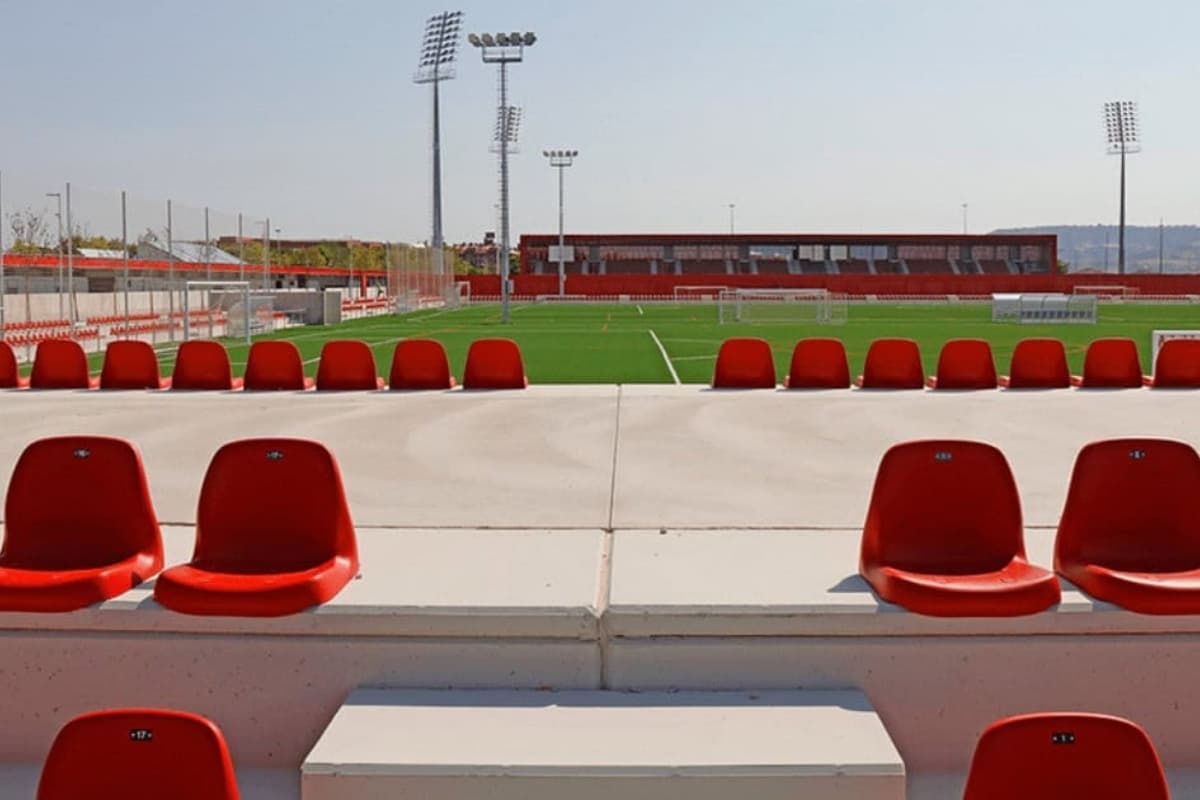
Two of the most recognisable names in world football. Two genuinely elite boarding school programs. Two completely different experiences. Parents who contact us having shortlisted both the PSG Academy Pro Residency in Greater Geneva and the Atlético de Madrid boarding school program in Madrid are facing one of the most interesting decisions in youth football development — not because one is clearly better than the other, but because they are built around fundamentally different philosophies, environments, and outcomes.
After guiding families into both programs, this is our honest comparison. Not a pitch for either. A genuine breakdown of what each program actually is, who it suits, and what the differences mean in practice.
Who This Comparison Is For
This article is written for parents and players who have moved beyond the early research stage and are seriously comparing these two specific programs. You already know both exist. You want to understand how they actually differ — in daily life, academic pathway, coaching environment, cost, and long-term outcomes.
If you are still in the early stages of exploring football boarding schools more broadly, start by exploring our football boarding schools overview page before reading this comparison.
Quick Snapshot Comparison
| Feature | PSG Academy Pro Residency | Atlético de Madrid |
| Club | Paris Saint-Germain | Atlético de Madrid |
| Location | Evian, France (Greater Geneva area) | Madrid, Spain |
| Duration | 10 months (full academic year) | 3 months (Non-EEA) / 6 or 10 months (EEA) |
| Age range | 12–18 (Middle & High School) | 12–18 |
| Price range | From €46,000 for football & school + €26,000 for room and boarding for one full academic year | From €40,000 for a 6-month all-inclusive program. From €70,000 for an all-inclusive full academic year |
| Non-EEA accepted | Yes — full 10-month season | Short-term only (max 3 months) |
| Academic qualification | Accredited American Middle & High School (SAT/ACT prep, US college pathway) | IB, American Baccalaureate, or Spanish national curriculum |
| Team structure | International elite squads training in PSG methodology | Direct integration into official Atlético academy teams |
| Language of instruction | English primary (French and Spanish classes included) | Spanish or English education |
| Campus setting | 15-acre gated domain, Alps and Lake Geneva | Official Atlético de Madrid high-performance residence, Madrid |
| Best suited for | EEA or Non-EEA players, US college pathway seekers, players wanting total residential immersion | EEA passport holders wanting deep Spanish football culture immersion |
The PSG Academy Pro Residency — Deep Dive
The Club Philosophy
Paris Saint-Germain is one of the most globally recognised football brands in the world — a club whose investment in talent development, infrastructure, and international reach over the past decade has transformed it into a genuine reference point for elite youth football. The PSG Academy Pro Residency program is not a marketing exercise built around the club name. It is a full-immersion residential program built on the authentic PSG methodology, delivered by technical staff who hold the highest UEFA certifications and are officially certified by the PSG Academy in Paris.
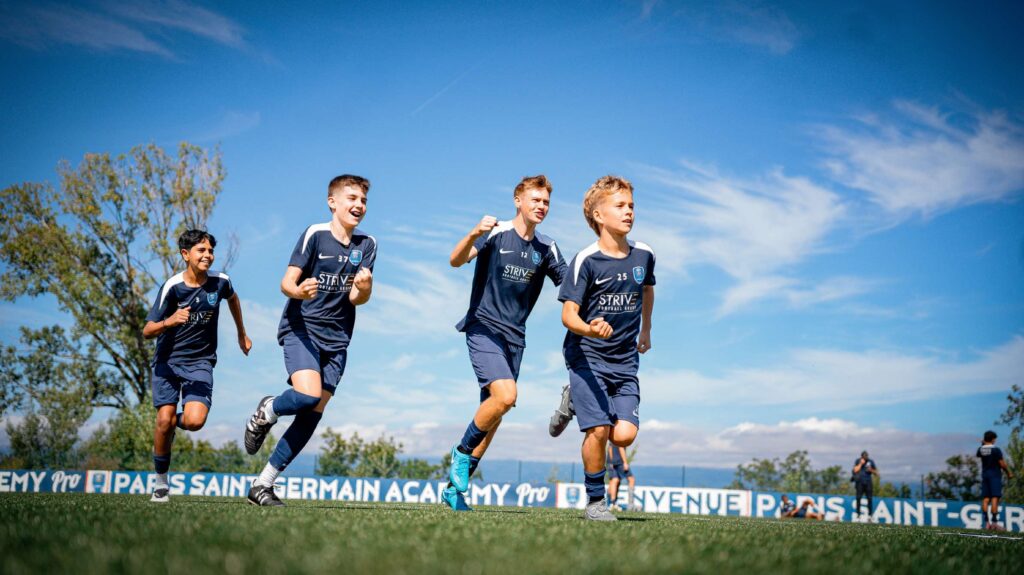
The program’s philosophy centres on developing the complete player — football intelligence, tactical sophistication, physical conditioning, academic achievement, and mental resilience, within a multicultural, international environment that prepares players not just for professional football but for life. The PSG approach to youth development emphasises football IQ, positional discipline, and the kind of technical refinement that has produced some of the most technically gifted players in the modern game.
Training Environment
Players train 20 hours per week under the PSG methodology, following the tactical frameworks, technical drills, and competitive structures used by the PSG Academy in Paris. Sessions emphasise football IQ development through rondos, small-sided games, and tactical setups — the building blocks of PSG’s distinctive possession-based, technically demanding style of play.
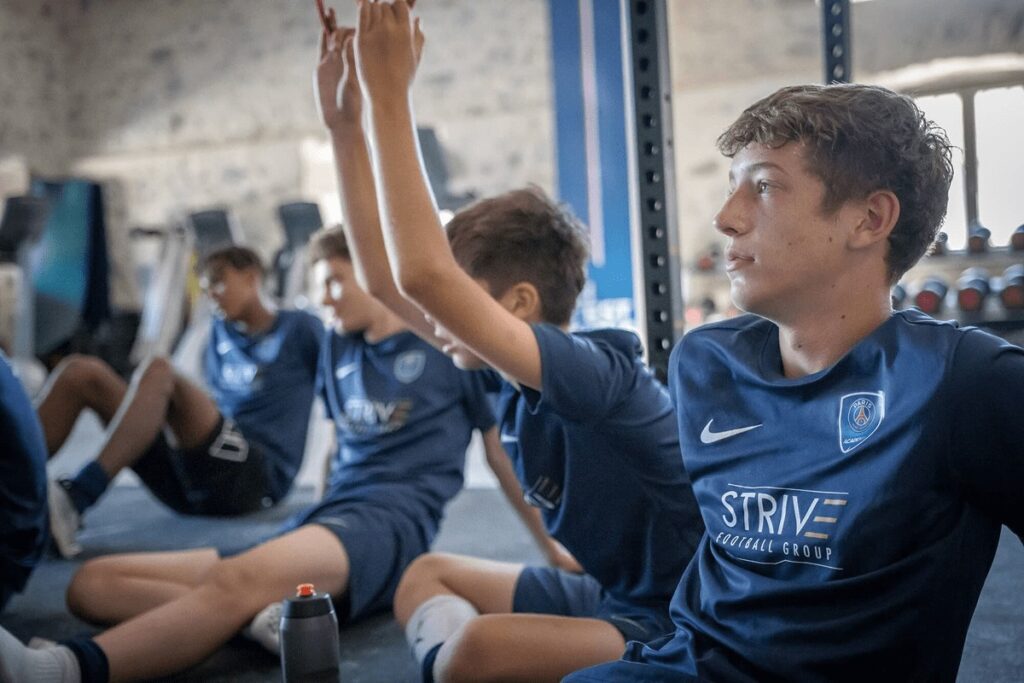
Crucially, the competitive schedule is genuinely challenging. Players participate in highly competitive games and top European youth tournaments, with maximum exposure to scouts built into the program calendar. The technical staff tracks individual development through video analysis, progress reports, and tactical study sessions — creating a level of individual attention that reflects the program’s genuinely elite positioning.
Training partners are international elite players drawn from over 20 nationalities. This creates a multicultural competitive environment that differs significantly from the predominantly Spanish peer group at Atlético — and is an important consideration for families evaluating which environment suits their child’s personality and developmental needs.
Academic Program
Academics at the PSG Academy Pro Residency are taken as seriously as football — a genuine claim with success stories of past players to prove it. Students follow an accredited American Middle and High School curriculum delivered through a hybrid model combining online coursework with guidance from accredited, on-site teachers.
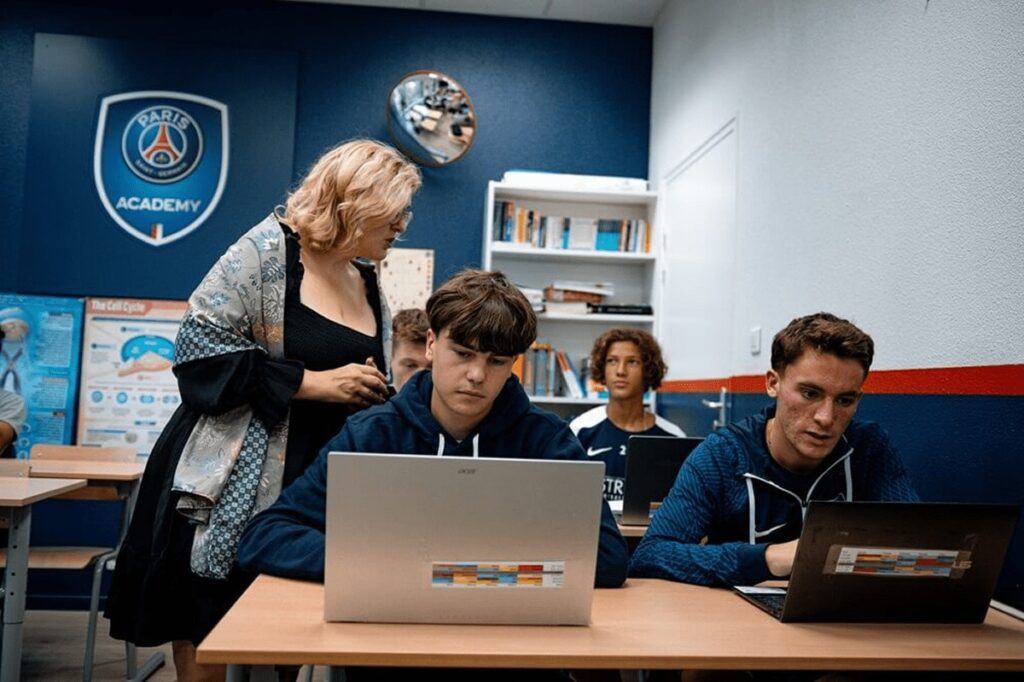
The academic pathway is specifically designed with US college placement in mind:
- SAT and ACT preparation is built into the curriculum
- DELF (French language certification) preparation is included
- Dedicated US college advisory services guide players and families through the university application process
- Individualized development plans address each student’s academic goals alongside their football development
For families whose child has aspirations toward a US college soccer scholarship — increasingly one of the most viable professional pathways for international players — the PSG program’s academic infrastructure is genuinely superior to most European boarding school alternatives.
Accommodation and Daily Life
The PSG Academy Pro Residency campus is a 15-acre gated domain in Evian, France, set between the Alps and Lake Geneva. The campus is also known as the International Center of European Football (ICEF). This is a purpose-built residential environment — not a school campus with accommodation attached, but a dedicated sports residency with every element designed around elite player development.
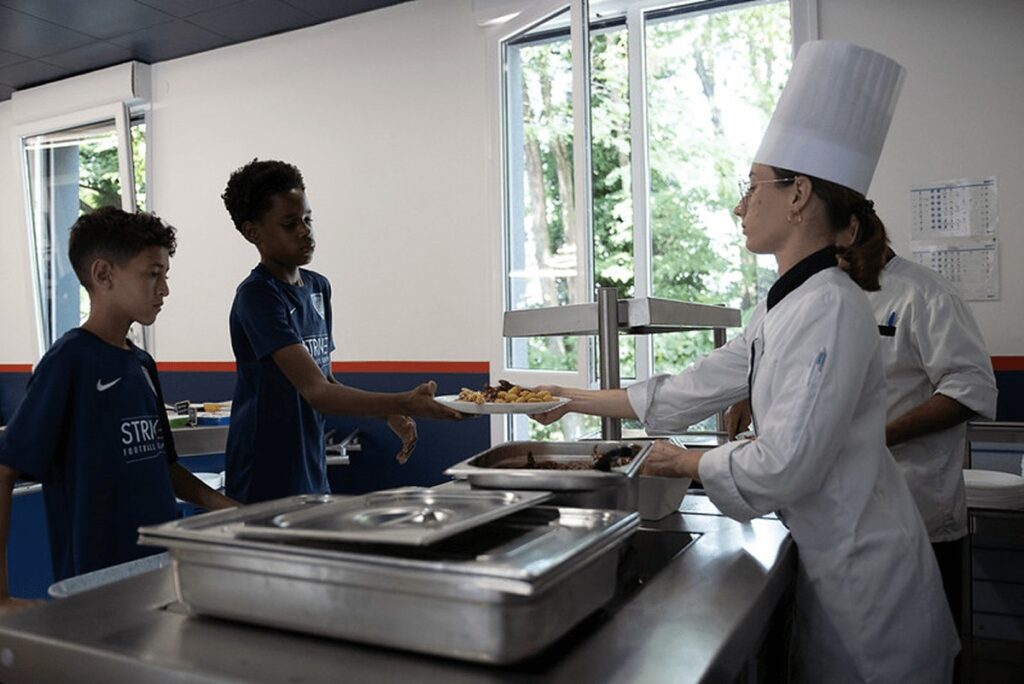
Players live in modern air-conditioned shared double rooms, serviced daily. Full-board access to an on-campus cafeteria provides four balanced meals per day prepared by on-site chefs. The campus features multiple lounge areas, a performance center with physical therapy and gym facilities, a dedicated mental performance coach, and a brand-new Esports and media room.
Outside of training and study, weekend excursions include boating on Lake Geneva, skiing in the Alps, and cultural trips to European capitals. For families whose child would benefit from a rich, varied residential experience that extends beyond football, this environment is extraordinary.
The social world is genuinely international — players from over 20 nationalities, communicating primarily in English, with French and Spanish classes integrated into the curriculum. For players arriving without Spanish or French, this is a significantly more accessible daily environment than Atlético’s Madrid residence.
Price and Duration
The PSG Academy Pro Residency is priced from €46,000 for the full 10-month academic year plus an additional €24,000 for room and boarding at the residence. This is among the highest price points of Oxasport’s boarding school programs and reflects the comprehensiveness of the package — training, accommodation, full-board meals, academic program, performance tracking, mental coaching, physical therapy, college placement services, and weekend excursions are all included.
The program runs for a full 10-month academic year. There is no short-term option. The Pro Residency is designed as a complete academic year commitment.
Visa and Eligibility
The PSG Academy Pro Residency accepts players of all nationalities for the full 10-month program. Unlike the Atlético de Madrid program, there is no EEA passport restriction for the full season. Both Non-EEA and EEA students may join the program. Non-EEA students have access to optional visa processing services offered by the PSG Academy Pro Residency admittance team available as an add-on for €600.
The program is designed for elite, highly competitive international youth players between the ages of 12 and 18, who are prepared for the demands of a professional football environment. A mandatory tryout — available via online video application or in-person in the US or France — is required as part of the admissions process.
The Honest Downside
The Evian campus is deliberately remote — and that is a feature, not a limitation. Set between the Alps and Lake Geneva, away from the distractions of a major city, the PSG Pro Residency creates a focused, controlled environment where players can dedicate themselves entirely to football and academics without the noise and temptation that living in a big city like Paris or Madrid inevitably brings. The safety and structure of a gated 15-acre domain on the Evian campus, with 24/7 supervision and everything on-site, is something many families specifically value — particularly for younger players living away from home for the first time.
That said, it is worth being clear-eyed about what this environment is and is not. The campus is not embedded in a professional football city. Players are not walking the same corridors as first-team staff or training on pitches used by PSG club’s academy players. The PSG methodology is authentically delivered — but the physical and cultural distance from Paris is real, and families who specifically want their child immersed in the heartbeat of a Ligue 1 professional academy environment should weigh that honestly.
There is also a structural difference worth naming directly. At Atlético de Madrid, players are placed into official academy teams at the club’s actual training facilities — training alongside Spanish academy players within their official youth academy structure. The PSG Pro Residency, by contrast, is an elite international program that trains in the PSG methodology within an official dedicated campus environment of Paris-Saint-Germain, alongside other international players. Both are genuinely high-level experiences. But they are different kinds of experiences — and for some players, the distinction between being inside a professional academy and training in a professional academy methodology matters significantly.
The Atlético de Madrid Boarding School — Deep Dive
The Club Philosophy
Atlético de Madrid is one of European football’s most distinctive and tactically demanding environments. A club that has broken the dominance of Real Madrid and Barcelona in La Liga twice in the last decade, Atlético’s identity is built on collective discipline, tactical intelligence, and a relentless competitive spirit that permeates every level of the club — including the boarding school program.
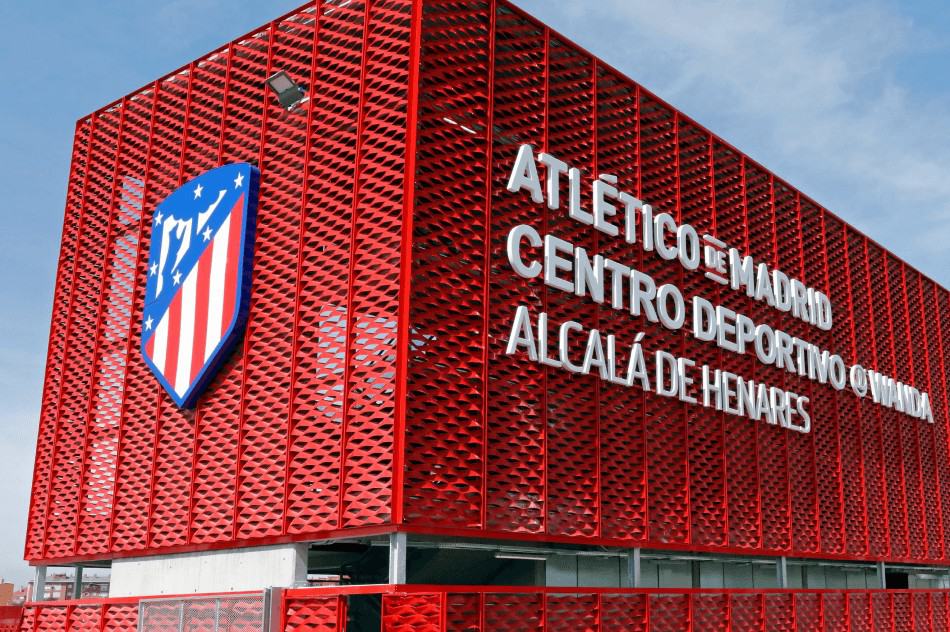
When a player joins the Atlético boarding school, they are not entering a program affiliated with the club — they are stepping inside the club’s actual operating environment. The training methodology, the physical standards, the daily culture, and the coaching staff are those of Atlético de Madrid’s official youth academy. This level of authentic immersion is what distinguishes the Atlético program from almost every other boarding school offering in Europe.
Training Environment
Players are placed directly into official Atlético de Madrid academy teams that match their current level. This is the single most significant structural difference between the Atlético program and almost every other boarding school in this comparison — including PSG. Your child is not training within a program designed to replicate academy football. They are inside the functioning professional academy, training alongside Spanish players who have been developed within that system.

Sessions are led by Atlético’s own coaching staff. Weekly collective tactical sessions build positional and game intelligence. Players receive individual feedback on physical preparation, nutrition, and performance data. The competitive level within training is Spanish professional academy standard from day one — which is both the program’s greatest strength and its most significant challenge for players who are not ready for immediate high-intensity integration.
Academic Program
Academic excellence is a genuine priority in the long-term program, delivered through a prestigious partnership with Colegio Liceo Europeo and Vermont Academy.
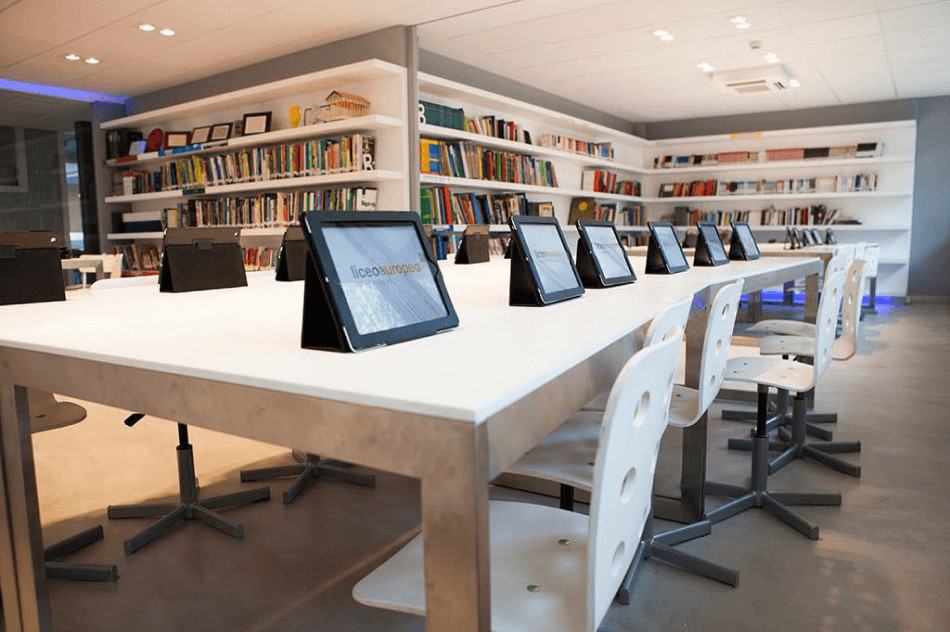
Players in the 6-month or 10-month EEA program can choose between:
- International Baccalaureate (IB) — the most globally recognised pre-university qualification, opening doors to universities worldwide
- American Baccalaureate — particularly suited to players with US college aspirations
- Spanish national curriculum — for players planning to remain in Spain long-term
The IB option is a genuine differentiator. Among all the boarding school programs Oxasport offers, the Atlético program is one of very few offering the IB alongside elite football training — making it a compelling option for academically ambitious families who want the most globally recognised qualification alongside their football development.
Accommodation and Daily Life
Players live at the official Atlético de Madrid high-performance residence in Madrid. Unlike the PSG campus which is a standalone residential domain, the Atlético residence places players inside Madrid — a major European capital, a city that lives and breathes football, and the home of one of La Liga’s most iconic clubs. Players at the high-performance residence live with other full-time youth players of Atlético de Madrid’s official academy.
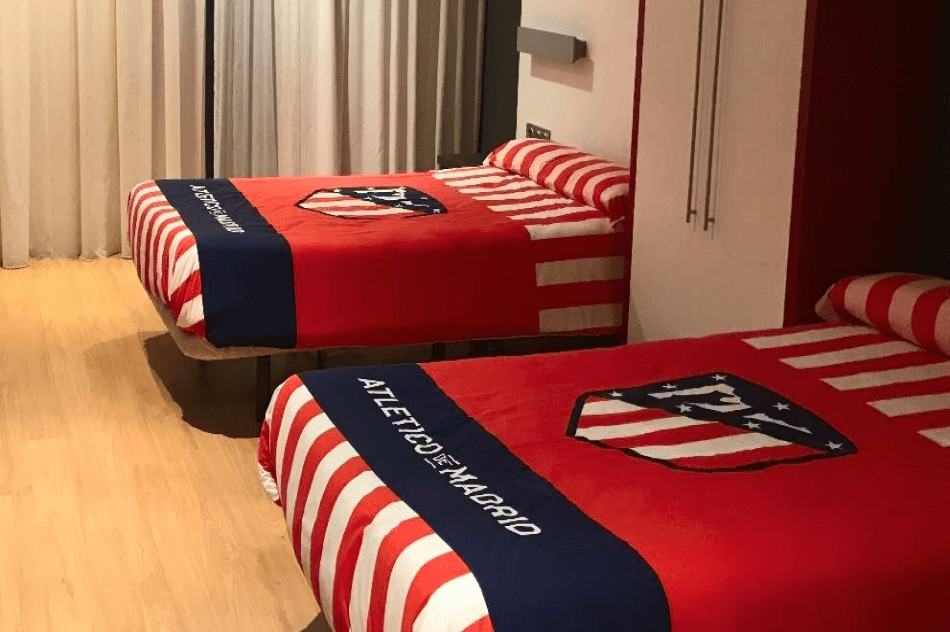
Daily life is structured around the rhythm of professional football culture. Housemates are predominantly Spanish academy players training at the same club. The social environment is primarily Spanish-speaking — players who arrive without Spanish will develop it through necessity as much as intention. For families who specifically want deep cultural and linguistic immersion in Spanish football culture, this environment is unmatched.
Madrid itself offers a richness of cultural experience that Evian, for all its natural beauty, cannot replicate. Players are living in one of Europe’s great cities, connected to the wider world, and embedded in the football culture that has shaped La Liga for generations.
Price and Duration
The Atlético de Madrid boarding school program starts from €40,000 for a 6-month boarding program. A full academic year is priced at €70,000 including all football, academics and boarding. This is exactly in line with the PSG Pro Residency who’s football, boarding and room also come to a total of €70,000 per academic year. Duration options are 3 months for non-EEA players, or 6 months and 10 months for EEA passport holders which allows players to experience shorter and longer term residential boarding experiences at Atlético de Madrid.
It is worth noting that the Atlético program’s price premium over some other Madrid options reflects the authentic club immersion it provides — the official residence, the coaching staff, and the direct academy integration that no independent program can replicate.
Visa and Eligibility
This is the most critical practical constraint of the Atlético program. Due to Spanish visa regulations and the club’s current administrative structure, non-EEA players cannot attend the full boarding school program for longer than 3 months. EEA passport holders can access the full 6-month or 10-month program through EU free movement.
Players from the USA, Latin America, Africa, Asia, and non-EU countries who want a full academic year must either hold an EEA passport or consider an alternative program. This is not a limitation that is likely to change in the short term — it is a structural feature of the program that families must assess honestly before applying.
The Honest Downside
The Atlético program’s approach of placing players directly into official academy teams is what makes it a truly unique experience — one of the very few boarding school programs in the world where a young international player genuinely lives and trains as a real professional academy player, within an elite La Liga environment, day in and day out. This is not a simulation of professional football culture. It is the real thing.
However, that same authenticity means places in the program are genuinely limited. Because players are integrated into official academy teams, the club must assess each applicant’s level before offering admission. Families are required to submit their child’s football CV and video footage for review by the academy’s technical staff. Not every player who applies will be admitted — and that selectivity is part of what makes the program credible and genuinely valuable for those who are accepted.
It is also worth being honest about what joining a professional academy environment actually feels like for a player arriving from outside that world. For many, it is a stark and immediate contrast to anything they have experienced in youth football at home. The standards, the pace, the expectations — they are those of a professional club, not a development program. The club provides strong support structures to help players integrate and feel at home from the first days, and players who embrace the environment with dedication and determination consistently describe it as the most transformative experience of their football lives. Players also often mention the warm and welcoming nature of their Spanish teammates who make them quickly feel at home in the program. But families should enter with clear eyes: this is a demanding environment that requires genuine commitment, resilience, and a readiness to be challenged every single day. The Atlético program may require a natural but real adjustment period for some players. After all, players are placed directly into an existing Spanish academy team alongside players who have trained within that system for years.
In addition, the 3-month cap for non-EEA players due to the strict FIFA regulations is the other major limitation. For families outside the EEA who want a full academic year experience, the Atlético program simply cannot deliver that regardless of their child’s level or how they perform. This visa reality ends the comparison for a significant portion of the global families who would otherwise find the Atlético program compelling.
Head to Head on the Factors That Actually Matter
Price
For a full academic year, the PSG and Atlético programs are both identically priced at €70,000 for football, academics and boarding. The Atlético Madrid program offers a 6-month semester boarding option for €40,000, whereas PSG only admits players for a full year. Both programs also offer weekly programs that can be extended to a period of up to 3-months for parents and players looking for a shorter stay, with the price depending on the number of weeks selected.
Passport and Nationality
For non-EEA families, this comparison is largely decided by eligibility alone. PSG accepts all nationalities for the full 10-month program. Atlético is restricted by FIFA rules meaning non-EEA players are limited to a maximum experience of 3 months. If your child does not hold an EEA passport and wants a full academic year, PSG is the clear choice between these two programs.
Location — France vs Spain
This is a genuinely significant lifestyle difference that families underestimate. Evian is an extraordinary natural setting — Alps, Lake Geneva, clean air, weekend skiing — but it is remote and not embedded in a football city. Madrid is a major European capital, deeply immersed in La Liga culture, where football is part of daily life in a way that no campus environment can fully replicate. Neither is objectively better — they suit different personalities. Players who thrive in focused, contained residential environments will love Evian. Players who want to feel the pulse of professional football culture will prefer Madrid.
Training Structure
This is the sharpest distinction between the two programs. At Atlético, your child trains inside a functioning professional academy alongside Spanish academy players. At PSG, your child trains within an elite international program following the PSG methodology alongside other international players. Both are genuinely high-level. But the experience of training within an actual professional academy versus an academy-methodology program is meaningfully different — and which is better depends entirely on what your child needs at their current stage of development.
Academic Pathway
Both programs take academics seriously — but they point in fundamentally different directions, and that difference matters enormously depending on your child’s longer-term goals.
Atlético de Madrid offers three distinct academic pathways through its partnership with Colegio Liceo Europeo and Vermont Academy: the International Baccalaureate, the American Baccalaureate, or the Spanish national curriculum. The IB is the standout option — widely regarded as the most prestigious pre-university qualification in the world, it opens doors to leading universities across every continent and is particularly valued by admissions teams in Europe, the UK, Asia, and beyond. For families who want maximum global academic flexibility alongside elite football development, Atlético’s IB pathway is genuinely difficult to match.
PSG’s academic program takes a sharply different focus. The Pro Residency delivers an accredited American Middle and High School curriculum with built-in SAT and ACT preparation, and dedicated US college placement advisory services. The PSG Academy also has a direct connection to the USA with its own PSG Academy in Virginia and its deep knowledge of the American football and college soccer ecosystem. For families whose child has a clear aspiration toward US college soccer, whether as a stepping stone toward professional football or as the primary goal in itself, the PSG program’s entire academic infrastructure is built around making that pathway as accessible and well-supported as possible. The PSG Pro Residency boarding school program offers this US college route deliberately and comprehensively.
Daily Life and Social Environment
PSG: English-primary, 20+ nationalities, structured campus life with organized weekend excursions, remote but extraordinarily beautiful setting. Atlético: Spanish-primary, predominantly Spanish peers, urban Madrid environment, embedded in professional club culture, but with school classes in English and bilingual Spanish and English speaking coaches and program coordinators. The PSG environment offers an international environment from the start. The Atlético environment offers deep Spanish cultural immersion.
Post-Program Outcomes
Both programs provide transformative development experiences that give players a significant advantage — in terms of technical quality, tactical education, and football exposure — over players who have not had comparable experiences. Neither program offers a direct pathway to a professional contract as a standard outcome, and families who choose based on that expectation will be disappointed. What both programs do genuinely deliver is the experience, education, and football foundation from which motivated players can build whatever comes next — professional football, US college soccer, or simply reaching their highest personal potential as a player.
Who Should Choose Which
Choose the PSG Academy Pro Residency if:
- Your child does holds an Non-EEA or an EEA passport and needs a full 10-month academic year
- Your family has a clear US college soccer pathway in mind and wants SAT/ACT preparation and college placement services
- Your child thrives in a structured, international, English-primary residential environment
- The Alps and Lake Geneva setting appeals as a living environment
- Your child is ready for a completely self-contained residential experience away from a major city
- Budget allows for the €70,000+ total investment including all additional costs
Choose the Atlético de Madrid boarding school if:
- Your child holds an EEA passport and can access the full 6 or 10-month program
- Your child specifically wants to train inside a functioning La Liga professional academy alongside Spanish academy players
- Academic prestige is a priority — particularly the IB, which offers maximum global university access, or your family is looking for an American Baccalaureate or Spanish educational pathway
- Your child thrives in urban environments and wants to be embedded in a football city
- Your child is technically and mentally ready for immediate integration into the Spanish football and cultural environment
- Your family’s budget is closer to the €40,000 base price point for a 6-month program, or €70,000 for a full academic year program
If you are still unsure: The most common reason families find this comparison genuinely difficult is that their child is an EEA passport holder at a high level who could genuinely succeed in either program. In that case the decision comes down to personality, academic direction, and lifestyle preference more than football development — because both programs will develop a committed, talented player well. Contact us with your child’s specific situation and we will give you a direct recommendation rather than a general answer.
Frequently Asked Questions
Yes. The primary language of instruction and daily communication at the Pro Residency is English. French language classes are part of the curriculum, so players will develop French over the year — but they are not required to arrive with French language skills.
In principle yes — a player could attend one program in one academic year and the other in a subsequent year, subject to meeting each program’s admissions requirements at the time of application. Some families do plan multi-year development pathways across different academies. Contact us if this is something you are considering and we can advise on sequencing.
We will be direct: for the majority of players, neither program provides a straightforward route to a professional contract. What both programs genuinely provide is elite coaching, professional-level exposure, and a development environment that gives motivated players the best possible foundation for whatever their football future holds. Families who choose based on the expectation of a professional contract are setting themselves up for disappointment. Families who choose based on genuine development, education, and life experience consistently describe both programs as among the best investments they ever made.
The PSG Pro Residency requires a mandatory tryout — available via online video application or in-person. The Atlético program also has an assessment process. Neither program accepts all applicants. We recommend contacting us before beginning either application process so we can advise honestly on whether your child’s current level meets the program’s expectations.
The PSG Pro Residency hosts players from over 20 nationalities on a 15-acre campus — the peer group is genuinely global. The Atlético program’s peer group is predominantly Spanish, with international players in the minority. This is one of the most practically significant differences between the two programs for families assessing daily life and social environment.
Ready to Take the Next Step?
Now that you understand the key differences, explore the full details, exact dates, and pricing for each program:
PSG Academy Pro Residency — Greater Geneva, France — All nationalities, full 10-month season, US college pathway
Atlético de Madrid Boarding School Program — EEA passport holders, La Liga academy immersion, IB, American Bacc or Spanish system academic option
Still unsure which program is the right fit for your child? Tell us about their age, current level, passport situation, academic goals, and what they are hoping to achieve. We will give you an honest recommendation — no sales pitch, no obligation.
Contact Oxasport for a free consultation
Also Compare
Atlético de Madrid vs Getafe CF Boarding School
All Football Boarding Schools — Oxasport Programs