
Player Story — Onimisi Johnson-Audu | Calgary, Canada | February 2026
Player: Onimisi Johnson-Audu (Johnson Jnr)
Age at time of program: 14
Nationality: Canadian
Home city: Calgary, Alberta
Position: Defensive Midfielder (No. 6) and Right Back (No 2)
Program: Atlético de Madrid High Performance Training Camp
Period: February 2026
Previous level: APDL U14, Calgary Southwest United FC
What came next: Confirmed place at Getafe International Madrid Football Academy, September 2027
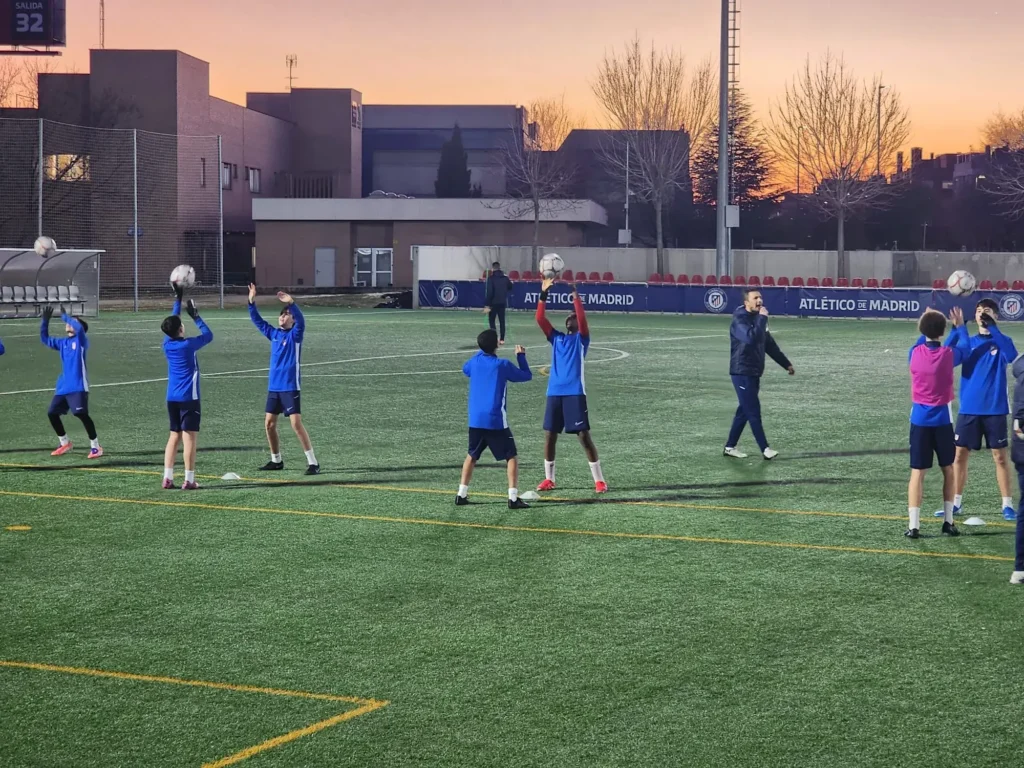
When Prince Johnson-Audu booked a one-week place at the Atlético de Madrid High Performance Training Camp for his 14-year-old son Onimisi in February 2026, he was not entirely sure what to expect. His son — known to everyone as Johnson Jnr — was playing at the highest level of youth football available in Alberta, Canada. He was technically capable, tactically aware, and clearly committed. But was that enough to hold his own at one of Europe’s most demanding professional club environments?
Seven days later, Prince had his answer. And it came with something he had not fully anticipated: a confirmed pathway to the Getafe International Academy in Madrid, starting September 2027.
This is their story — told in Prince’s own words, with his full permission.
Onimisi Johnson-Audu is a 14-year-old defensive midfielder (number 6) and a right back (number 2) from Calgary, Alberta, Canada. He has been playing organised football since the age of seven, developing through academy environments in Calgary that have included programs run by Real Madrid, Barcelona, and Bolton Wanderers.
Before travelling to Madrid, he was competing for Calgary Southwest United FC in the APDL U14 league — the highest level of youth football available in his province. He is technically strong, tactically disciplined, and has consistently been one of the most dependable players in his teams, demonstrating the kind of reading of the game and quiet leadership that characterises the best defensive midfielders or defenders, depending on where he was deployed by his coach.
Since returning from the Atlético program, he has stepped up to play a year above his age group with Calgary Villain FC in the U15 category, deliberately choosing a more physically demanding environment to add steel to his game. He is now preparing to join the Getafe International Academy in Madrid in September 2027, spending the intervening period learning Spanish and completing Grade 9 in Canada before making the move to Spain full-time.
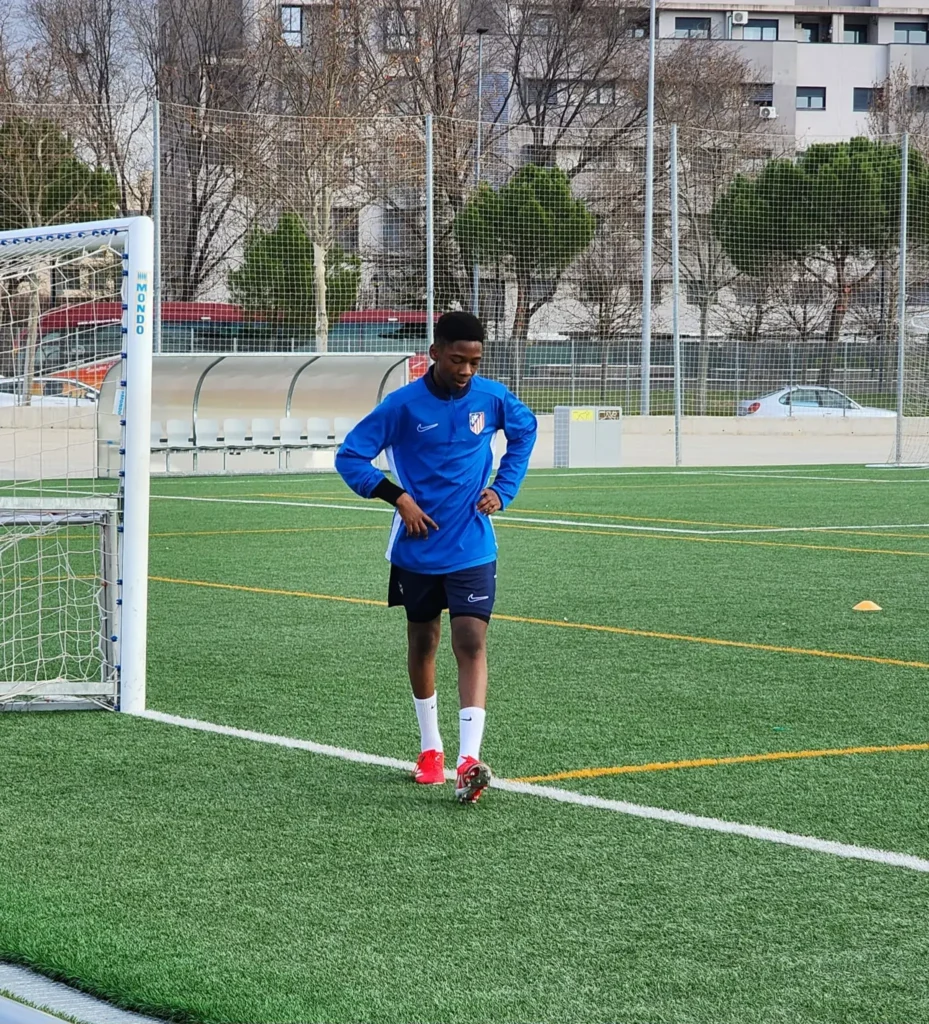
Canada’s football infrastructure has improved significantly in recent years, but for a player with genuine ambitions at the highest level, there comes a point where the environment available locally simply cannot provide what is needed. For the Johnson-Audu family, that point arrived while Onimisi was still 13.
“While we were very pleased with his development in Canada, we felt that there were limitations to how far he could progress without exposure to a higher-performance football environment,” Prince explains. “We wanted him to experience a culture where the game is taught at a much higher tactical and technical level — with greater emphasis on speed of play, decision-making, positional intelligence, and professional standards.”
Several conversations with coaches and experienced football professionals reinforced this thinking. They could see the potential and were direct about what was needed: exposure to a European environment, even briefly, to both challenge Onimisi and give the family an objective sense of where he stood against international peers.
The decision was made to find a short-term program in Spain — the country widely regarded, as Prince puts it, as “the epicentre of football.” After researching options online, the family came across Oxasport and among the programs available, one stood out immediately.
“Atlético de Madrid felt like the perfect fit because its football philosophy closely matched Johnson Jnr’s style of play,” Prince says. “As a defensive midfielder, he thrives on discipline, tactical awareness, teamwork, and intelligent decision-making — qualities that Atlético is renowned for developing under its high-performance methodology.”
What also gave the family confidence was the Oxasport team’s approach from the very first contact. “Every question we had — about the training program, accommodation, player welfare, logistics, and expectations — was answered promptly and honestly. The communication throughout the process was clear, detailed, and supportive.”
Even when you have done your research and feel confident in your decision, sending your 14-year-old to train in Spain for a week carries a specific kind of parental anxiety. Prince is candid about what was going through his mind in the weeks before Onimisi left.
“Our biggest concern was whether Johnson Jnr would be able to adapt quickly to an unfamiliar environment. It was his first time training in a professional European football setting, and naturally we wondered whether the intensity, pace of play, and tactical expectations would be significantly higher than what he had experienced in Canada.”
The language barrier was a secondary concern. Would Onimisi be able to communicate with coaches and teammates? Would he be able to build relationships with players from different countries in the space of a single week?
There was also the deeper question that every football parent asks when putting their child into a genuinely elite environment for the first time: how would he measure up against players from countries where football is embedded in the culture from the moment children can walk?
“We wanted the experience to challenge him,” Prince says, “but we also hoped it would build his confidence rather than discourage him.”
As it turned out, almost every one of those concerns proved to be unfounded — not because the program was easier than expected, but because it was better organised and more thoughtfully delivered than the family had anticipated.
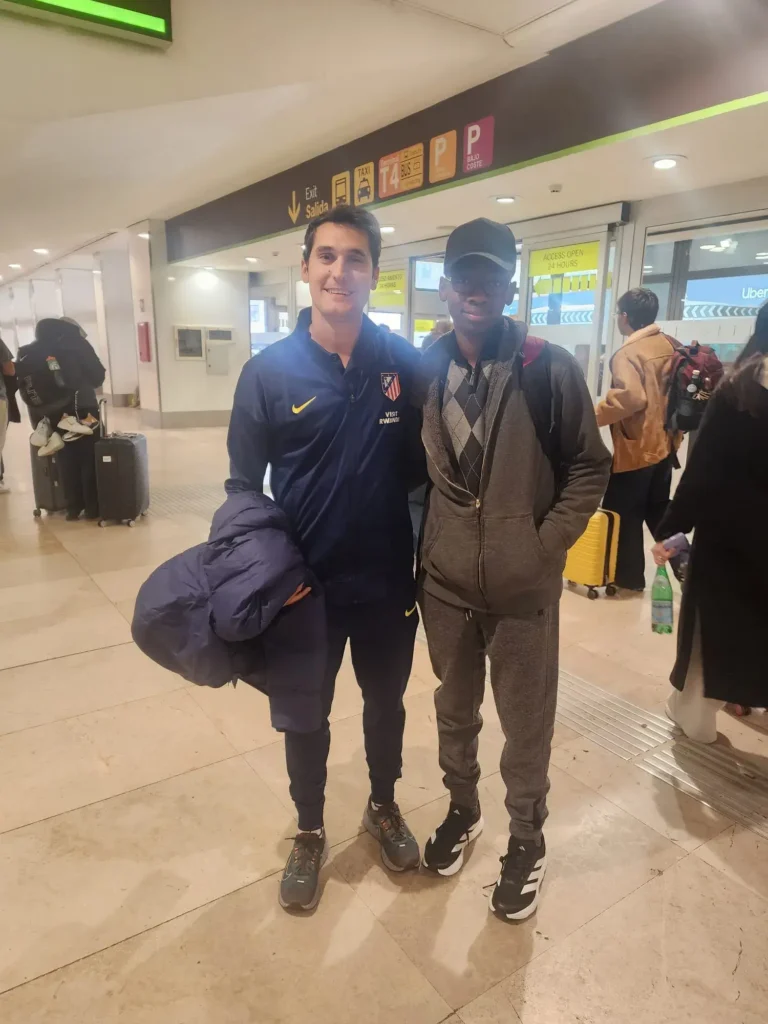
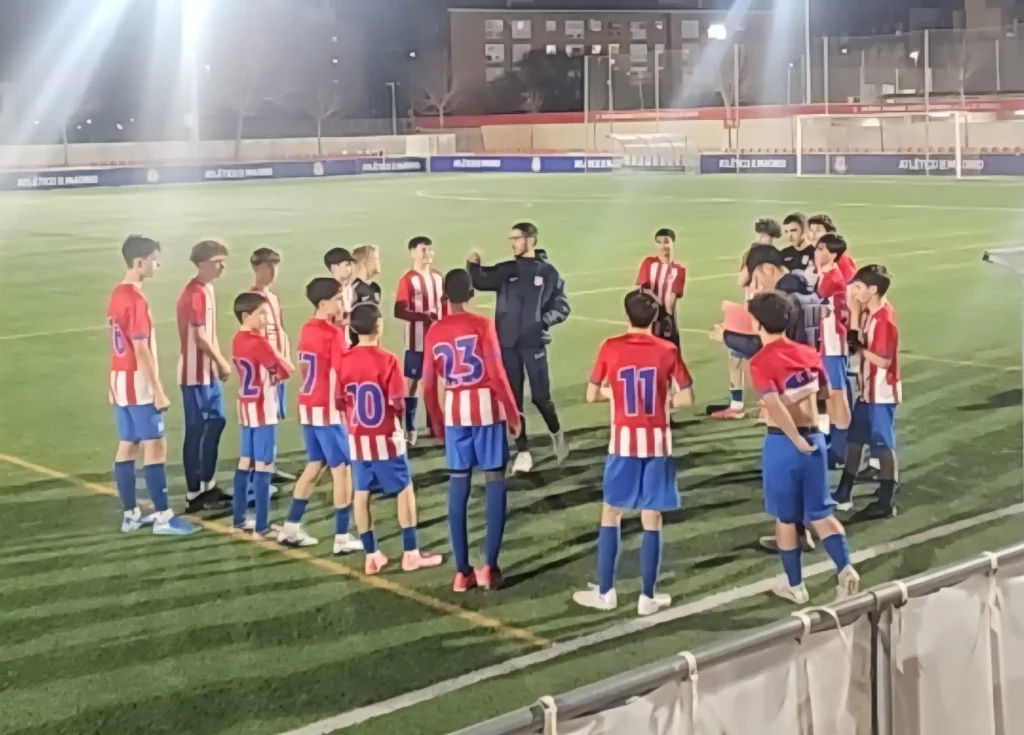
The Atlético de Madrid High Performance Training Camp takes place at the club’s official facilities — the same environment used by the Academy’s regular players. From the moment Onimisi arrived, the professional standards were visible in everything.
“From the moment he arrived, he was impressed by how professional everything was — from the quality of the facilities and perfectly maintained training pitches to the organisation, punctuality, and attention to detail. Every part of the environment reflected a club that operates to elite standards.”
The first training session was where reality arrived in full.
“One of the first things he noticed was the intensity and speed of play. The ball moved much faster than he was used to, and every exercise demanded quick thinking, precise passing, and constant movement. There was very little downtime between drills, and the coaches expected players to stay focused and engaged throughout the entire session.”
The quality of the other participants was equally striking. These were not players who relied on physical ability or individual skill. They were technically precise, positionally intelligent, and made decisions instinctively under pressure. For a young defensive midfielder from Calgary, it was the most demanding football environment he had ever entered.
And yet — crucially — it did not discourage him. It energised him.
“When we spoke after the first day, Johnson Jnr said the sessions were more intense than anything he had previously experienced. He was physically tired but genuinely excited. Rather than feeling overwhelmed, he felt motivated because he could see the level he wanted to reach.”
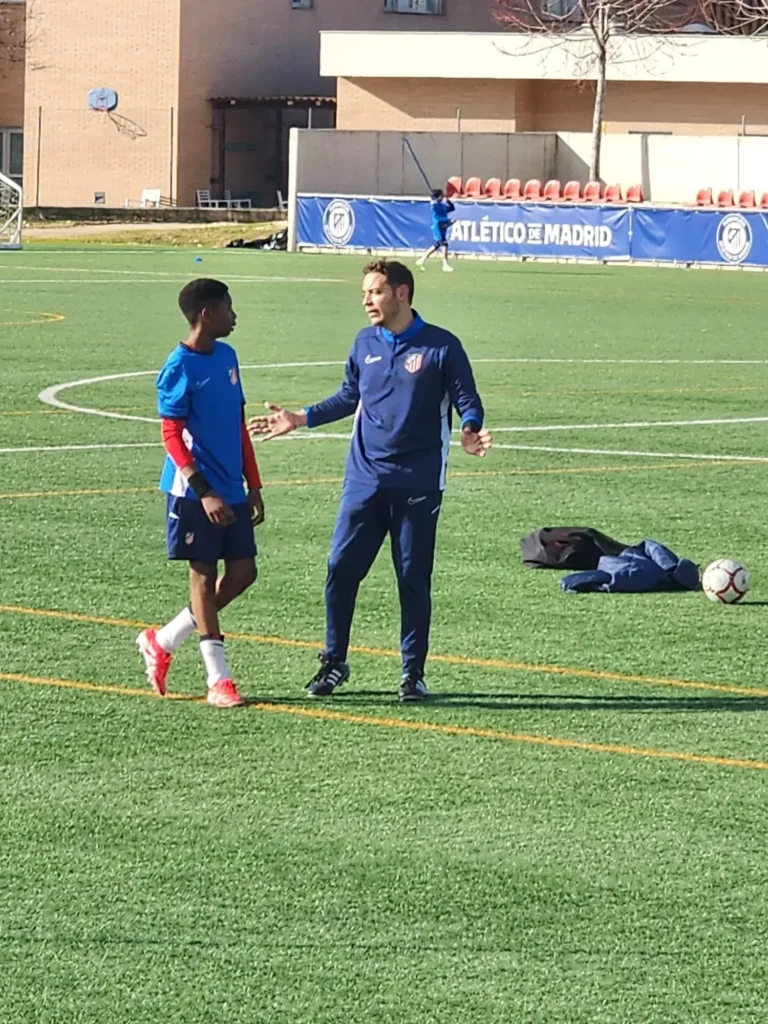
For any family considering a professional club training program, the most important question is: what specifically will my child learn that they cannot learn at home? For the Johnson-Audu family, the answer was tactical intelligence — and the difference in standard was immediately visible.
“The biggest difference was the level of tactical detail and the speed at which the game was played. In Canada, Johnson Jnr had received good coaching and a strong foundation, but at Atlético de Madrid every exercise had a clear tactical purpose. It was not just about completing drills or improving technique — it was about understanding positioning, decision-making, movement off the ball, and how every action contributes to the team’s overall play.”
For a defensive midfielder specifically, the Atlético coaching staff focused on elements that the position demands at elite level but that are rarely coached with this level of specificity below that standard: scanning the field before receiving the ball, playing quickly under pressure, maintaining the correct body position, and making intelligent decisions with one or two touches.
“The coaches constantly reminded players to think ahead, communicate, and anticipate what would happen next rather than simply reacting to the play. That level of tactical awareness was something he had not experienced so consistently before.”
The coaching approach itself was also different from what Onimisi was used to. Every small mistake became a teaching moment — coaches would stop play briefly, explain what a better decision or movement would have produced, and restart. The emphasis was not on punishment for errors but on understanding why a different choice would have been more effective.
“He was also struck by the quality of the other players. They were technically very strong, comfortable on the ball under pressure, and made quick decisions instinctively. Rather than relying on individual skill alone, there was a strong emphasis on teamwork, positional discipline, and understanding the game.”
When families reflect on an experience like this, there is usually one moment that crystallises everything. For the Johnson-Audus, it was not a goal or a match result. It was a shift in mindset that happened gradually over the course of the week — and became visible in a phone call midway through the program.
“During the first couple of training sessions, he was understandably taking everything in — adjusting to the pace, observing the other players, and learning the coaches’ expectations. By the middle of the week, however, we could see a noticeable change. He became more confident in possession, communicated more with his teammates, and began playing with the composure and intelligence that had always been part of his game.”
A piece of individual feedback from one of the coaches accelerated that shift. After a training session, Onimisi was told by a coach to continue playing with confidence — his discipline and decision-making in midfield had been noted. It was a brief comment, but the source gave it a weight that the same words from a Canadian coach might not have carried in the same way.
“That encouragement reinforced his belief that his strengths — reading the game, staying composed under pressure, and making smart decisions — could compete in a high-performance setting.”
When Prince spoke to his son midway through the week, the conversation was different from what he had expected. “Instead of talking about being tired or overwhelmed, he spoke enthusiastically about everything he was learning and how much he wanted to keep improving. We could hear a new level of confidence in his voice. He was not just enjoying the experience — he had started to believe that, with continued hard work and the right opportunities, he could compete in elite football environments.”
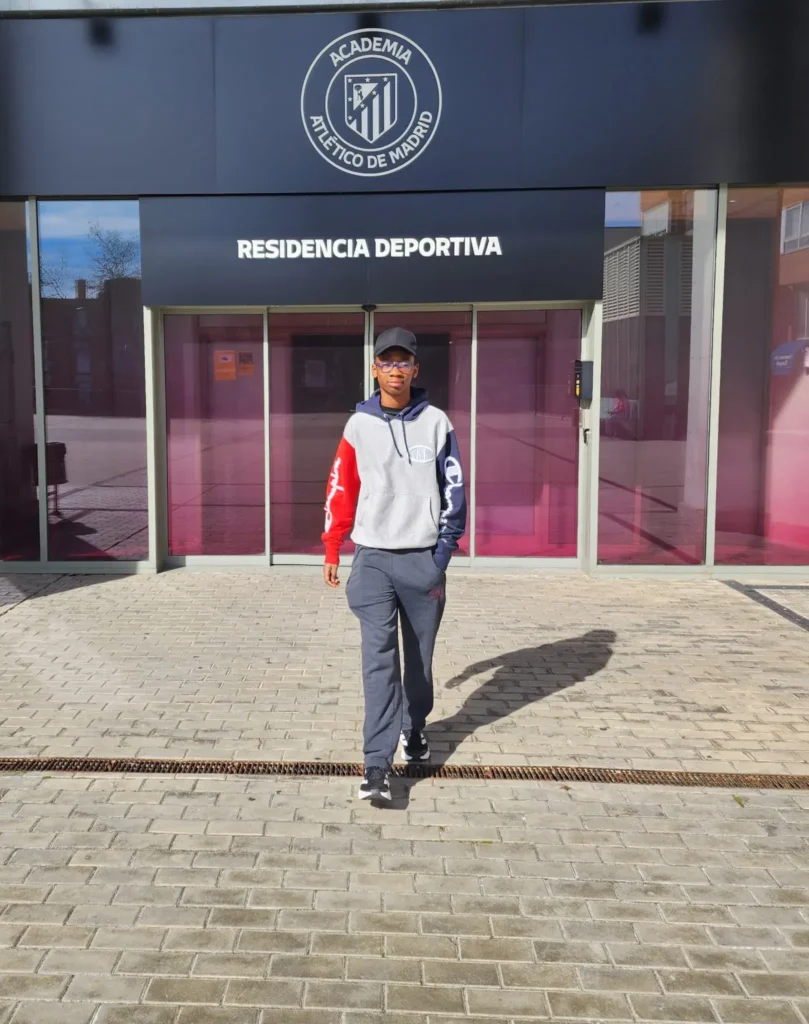
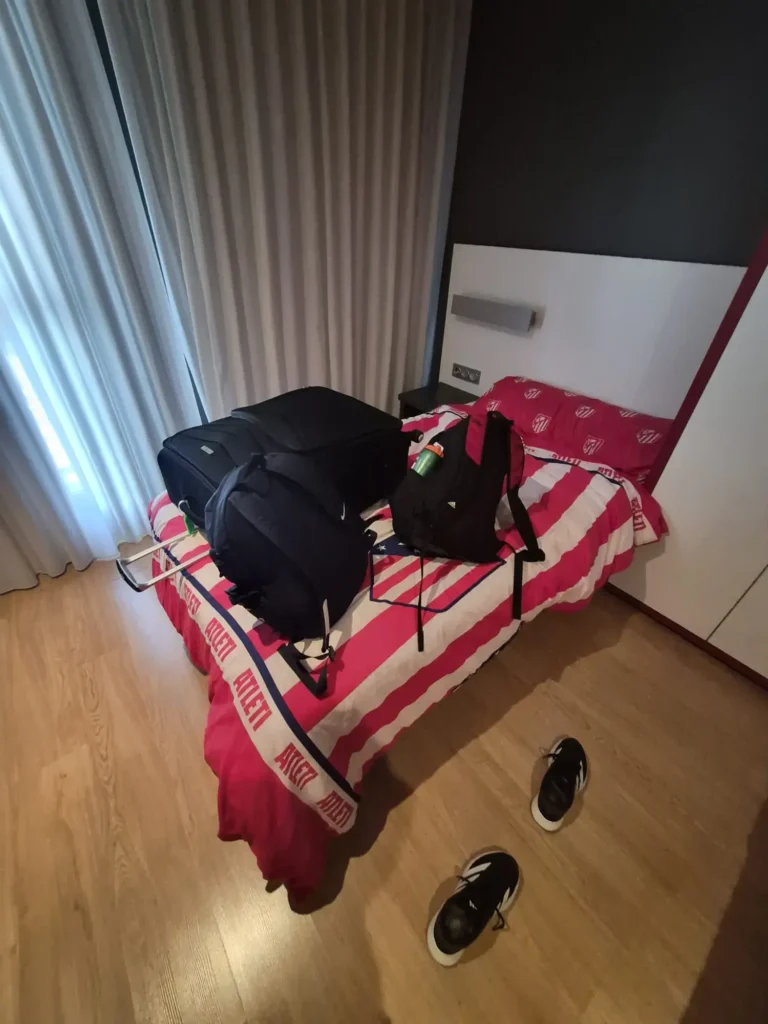
The Atlético de Madrid High Performance Camp is not only about football. The daily structure is designed to give participants an experience of what professional athletic life actually looks like — from the meals and recovery routines to the relationships formed with players from across the world.
“Each day followed a structured routine that helped him appreciate what life in a professional football environment is really like. From breakfast and preparing for training to recovery, meals, rest, and spending time with other players, everything was well organised and centred around helping the players perform at their best.”
The nutritional side of the experience made a particular impression. The food was balanced, sports-focused, and clearly designed by people who understood the specific demands of intensive training. For a 14-year-old from Calgary, it was the first time nutrition had been presented as an integral part of athletic performance rather than a peripheral consideration.
The international dimension of the camp was equally formative. Onimisi trained alongside players from multiple countries and football backgrounds, navigating the common language of football when verbal communication was limited by differences in language. “It opened his eyes to how football brings young people together despite differences in language and culture. He enjoyed the challenge of competing alongside talented players who all shared the same passion for the game.”
The family also spent an additional week in Madrid beyond the camp itself, exploring the city. “He could feel how deeply football is woven into the city’s culture. Everywhere he looked, there was a sense that football was more than just a sport — it was part of everyday life.”
The week at Atlético de Madrid did more than improve Onimisi’s football. It gave the Johnson-Audu family the clarity and confidence to commit to a full European development pathway. Since returning, the family has secured Onimisi a confirmed place at the Getafe International Academy in Madrid — a full-year residential program starting September 2027 that is specifically designed for international players at his stage of development. The Atlético experience, Prince says, made that decision feel not just possible but necessary.
The most telling measure of any development program is not what happens during it but what happens afterwards. In Onimisi’s case, the changes were visible almost immediately upon his return to Calgary.
“On the pitch, he plays with greater composure, makes quicker decisions, has improved positional awareness, and demonstrates an improved understanding of the game. Off the pitch, he has become more confident, disciplined, and mature.”
His coaches in Canada noticed. Since returning, he has deliberately chosen to move up a year group — now playing U15 with Calgary Villain FC at 14 years old — specifically to replicate the physical challenge he experienced in Madrid and continue developing in a demanding environment.
The most concrete outcome, however, came through a decision the family made as a direct result of the week at Atlético. Onimisi has secured a confirmed place at the Getafe International Academy in Madrid, starting in September 2027.
“Since returning, Johnson Jnr has received an offer to join the Getafe International Academy in Spain, which has been a direct result of our increased confidence in pursuing elite football opportunities abroad.”
The intervening period — 2026 to 2027 — is being used deliberately. Onimisi will complete Grade 9 in Canada, spend a year learning Spanish, and step up physically and mentally before making the full commitment to a year-long residential program in Madrid.
For parents who are where the Johnson-Audu family was a year ago — curious, uncertain, wondering whether a program like this is realistic for their child — Prince’s advice is direct.
“I would tell any parent who is considering the program to take the opportunity if their child is passionate about football and eager to learn. It is far more than just a training camp — it provides a genuine insight into what life is like in a professional football environment.”
He also has practical guidance for preparation. Physical fitness is a baseline requirement, but it is the mental preparation that matters most. “Encourage them to arrive with an open mind, be ready to learn, ask questions, accept constructive feedback, and embrace being challenged. The players who benefit the most are those who are willing to step outside their comfort zone.”
And perhaps most importantly: “Tell them not to worry about comparing themselves to other players. Everyone is there to learn. If they work hard, stay humble, and enjoy the process, they will come away with far more than just improved football skills — they will return with greater confidence, valuable life experiences, and a clearer understanding of what it takes to reach the next level.”
The one thing he would have liked the program to offer, and which he suggests as an enhancement for the future: video footage of the match-day game and key training sessions. “Being able to watch the footage afterwards would be incredibly valuable for the players, allowing them to review their performance, learn from their decisions, and track their progress over time. It would also become a lifelong keepsake for the children and their families.”
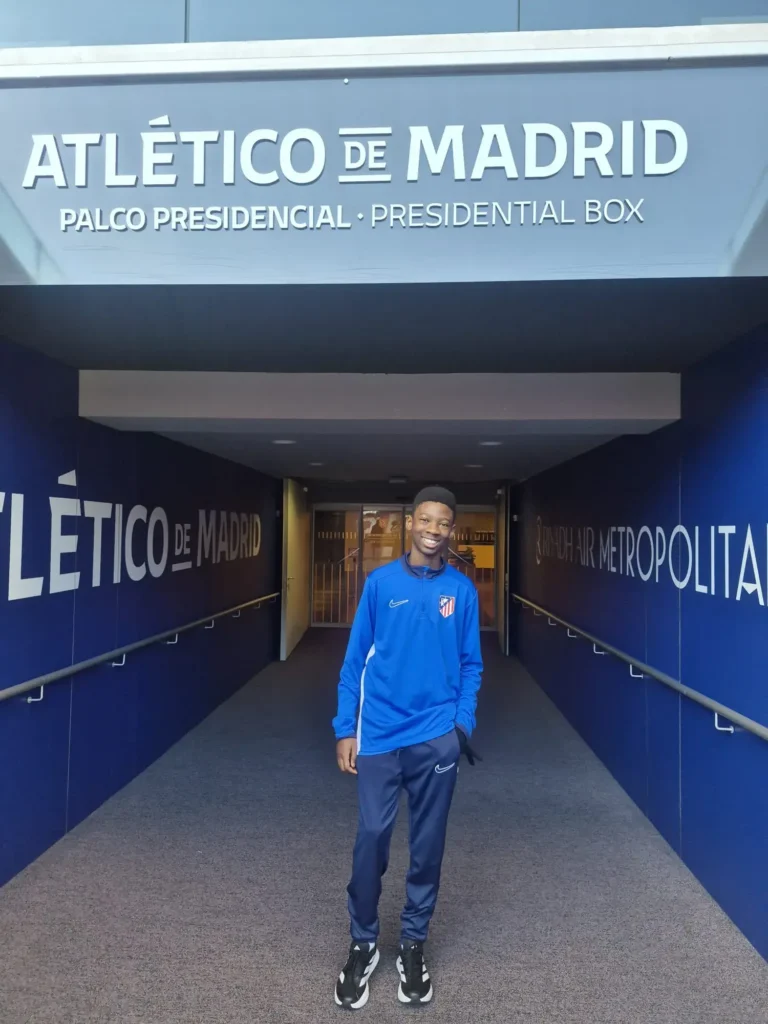
When asked what he would say about the experience in his own words, Johnson Jnr did not hesitate.
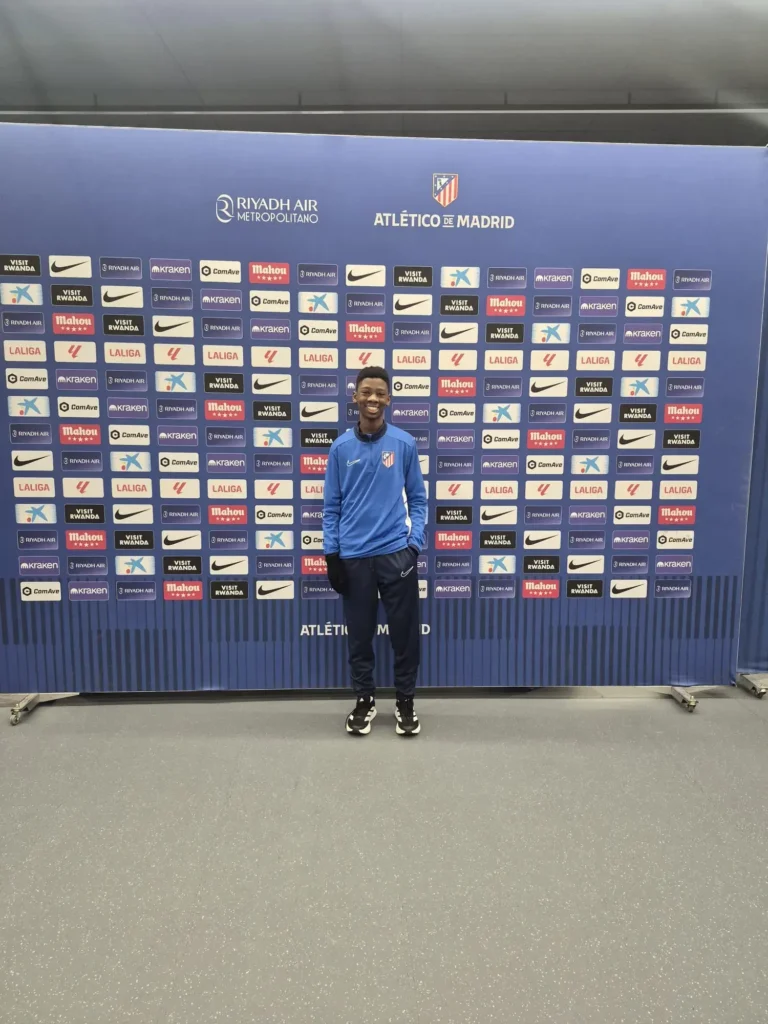
“It was one of the best football experiences of my life. It showed me the level I want to reach, gave me confidence that I can get there, and motivated me to work even harder every day to achieve my dream of becoming a professional footballer.”
Onimisi’s story was shared by his father Prince Johnson-Audu with full permission. All quotes are Prince’s own words. The article was reviewed and approved by the family before publication.
If you are considering a short-term high performance experience at Atlético de Madrid or another elite European club for your child, Oxasport guides families through every step of the process — from understanding which program is the right fit to managing the application and logistics.
There is no cost to enquire and no obligation to proceed.
Explore the Atlético de Madrid Individual Formative Program and Boarding School →
Explore the Getafe International Academy →
Contact the Oxasport team for advice about Football Boarding School and High-Performance Camps →