
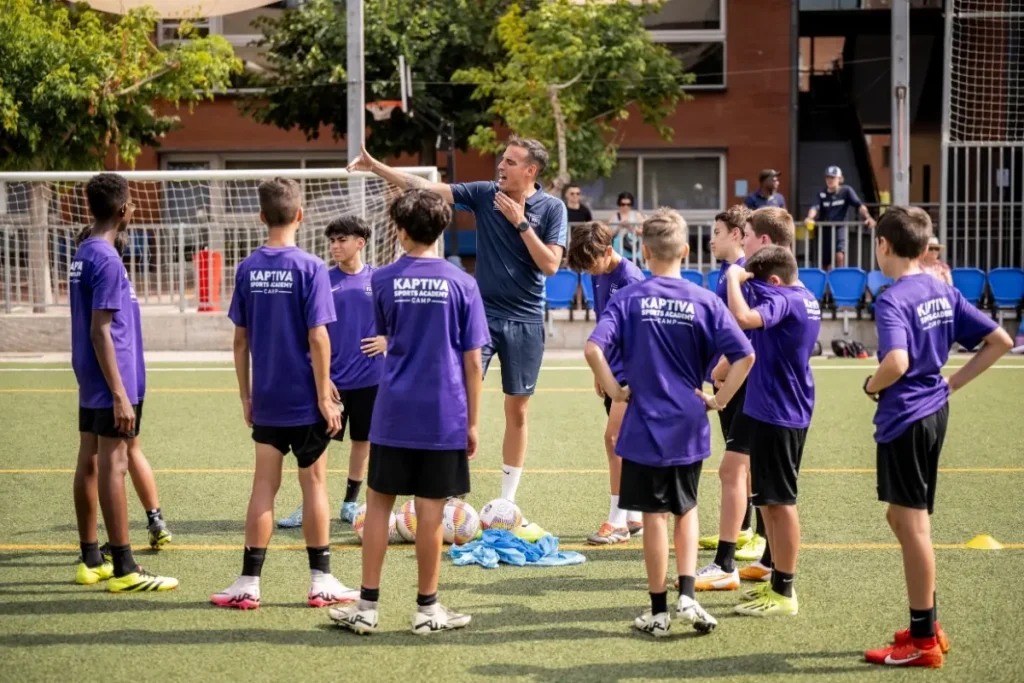
Since 2012, Kaptiva Sports Academy (KSA) has been developing international footballers in one of the world’s great football cities. Based in Sant Cugat, just outside Barcelona, KSA is not a summer camp or a short trial experience; it is a ten-month full-immersion residential program for players aged 12 to 17 who are serious about long-term development.
What makes KSA genuinely different is its proprietary training methodology, its dual-track approach to football and academics, and the competitive environment that Barcelona uniquely provides. This post breaks down how the program actually works, the training philosophy, the weekly structure, the academic model, and the football culture players are immersed in.
The F.A.S.T. Methodology — KSA’s Approach to Player Development
The entire training program at Kaptiva Sports Academy is built around a proprietary framework called F.A.S.T. — Football Academy System Training. Developed over more than a decade of working with international youth players, it is built on a core belief: accelerated development requires total immersion, not just more time on the pitch.
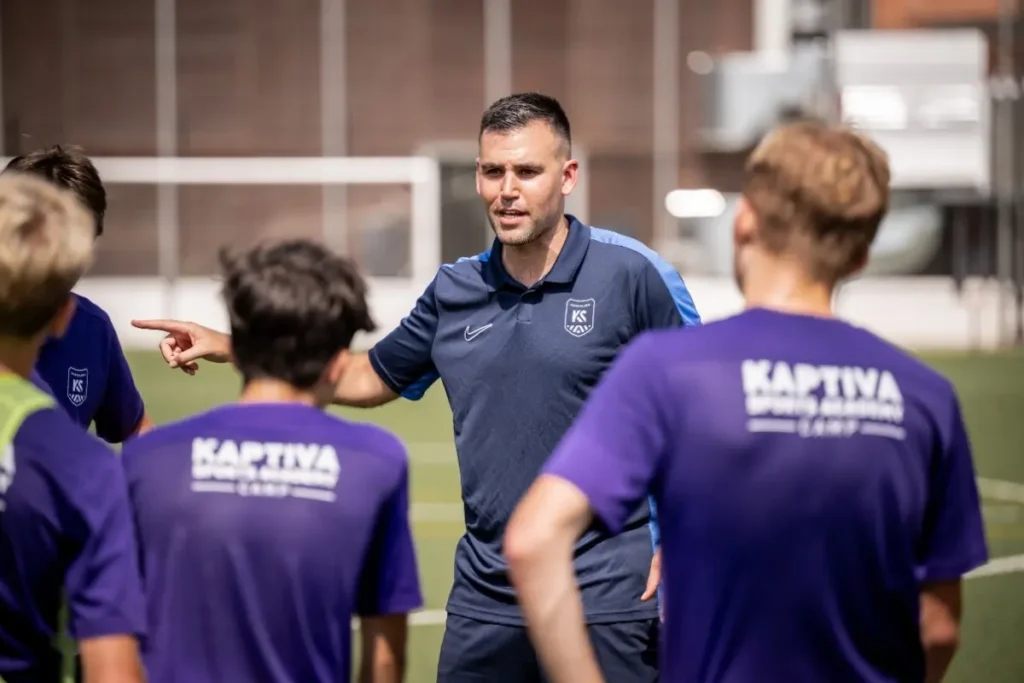
The methodology is not a fixed curriculum. Throughout the season, the technical team designs customized long-term plans made up of specific practices aimed at defined objectives within a chosen game model. Every session connects to a larger arc of development; nothing is isolated.
Individualized Training
Each player receives training across three personal dimensions: technique, physique, and position. Individual sessions are designed around the specific demands of the player’s role, ensuring that development is targeted rather than generic. A central midfielder and a centre-back are not trained the same way.
Team Training
Alongside individual work, players participate in structured collective sessions focused on tactics, teamwork, and video analysis. The F.A.S.T. methodology treats individual and team development as inseparable; personal growth only has value if it translates into collective performance on match day.
Club Integration — Training With a Local Spanish Club
A defining feature of the KSA program that separates it from most international academies is that players do not only train within the KSA environment. Throughout the week, players also participate in dedicated training sessions with a local Spanish club, giving them exposure to the demands, rhythms, and competitive standards of Spanish football from the inside.
This dual structure is intentional. KSA sessions focus on the F.A.S.T. methodology; technical, physical, and positional work within KSA’s own game model. Club sessions then place players in a real Spanish football club environment, where they train alongside local players, apply what they are learning in a genuinely competitive team context, and build the adaptability that professional football requires. The two types of training are complementary, not interchangeable: one develops the individual, the other tests that development in a real collective environment.
Invisible Training
Perhaps the most distinctive element of KSA’s approach is what it calls “invisible training”, the performance work that happens off the pitch but directly shapes what happens on it. This encompasses dedicated mental coaching sessions to build psychological resilience, nutritionist-led guidance on fuelling performance and recovery, and physiotherapy support covering prevention, treatment, and rehabilitation. These are not optional add-ons. They are built into the weekly structure as non-negotiable components of the program.
The 360 Player App — How KSA Tracks Development
KSA uses a software platform called the 360 Player App to connect all parts of the development environment. Through the app, coaches measure and track athletic performance using personalized data, plan training sessions and match schedules, share video and tactical analyses with players, and maintain direct communication with both players and parents throughout the season.
This transparency is significant for families. Rather than waiting for an end-of-season report, parents can follow their child’s development in real time, a reassurance that is often as important as the program itself.
Competition — Who Do KSA Players Actually Play Against?
For families evaluating any football academy, the quality and volume of competitive exposure are two of the most important questions. At KSA, the competitive calendar is genuinely elite.
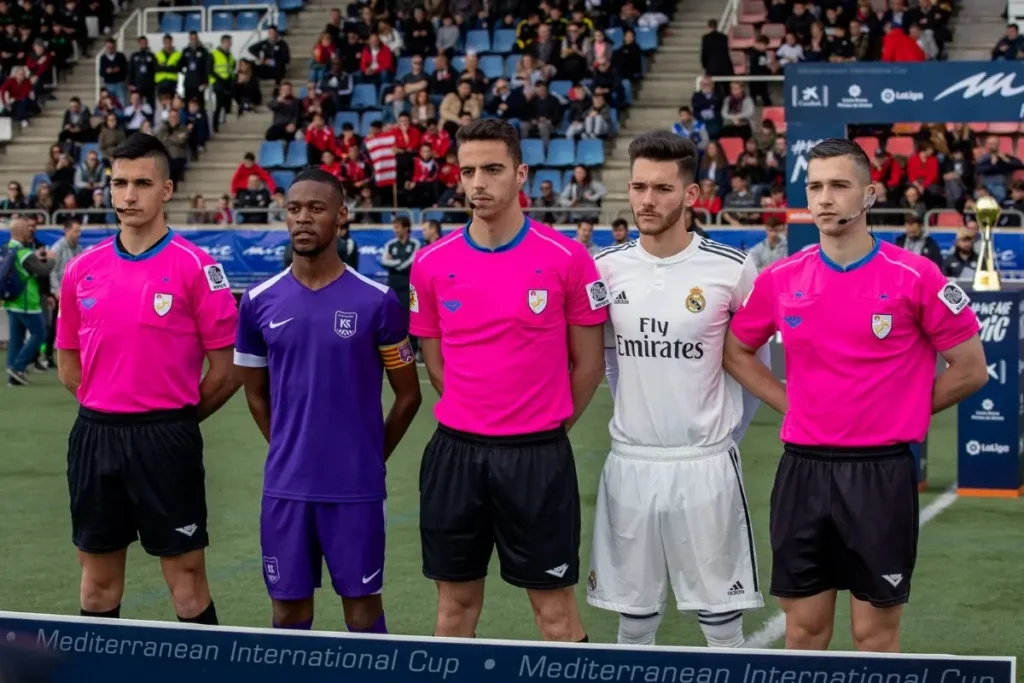
Over the course of a full season, players participate in 30 FCF (Catalan Football Federation) games, 2 LaLiga youth games, 2 national or international tournaments, and 2 football tours. Weekend fixtures are embedded into the weekly schedule, so match experience is consistent throughout the year rather than front-loaded into showcase events.
The clubs KSA players have previously faced at the youth level include FC Barcelona, Real Madrid, Atlético de Madrid, Valencia, Sevilla, Real Sociedad, Athletic Club Bilbao, Espanyol, Getafe, Girona, Málaga, Real Betis, Mallorca, Levante, and international sides including Crystal Palace and Olympique de Marseille. The level of opposition is not arranged; it reflects KSA’s standing within the Barcelona football ecosystem.
A Week in the Life at KSA
Understanding the daily rhythm of the program helps families assess whether it is the right environment for their child. Here is how a typical week is structured.
Monday, Tuesday, Wednesday, and Friday
The day begins with KSA training sessions at 7:45 am. These are the academy’s own technical sessions, structured around the F.A.S.T. methodology and focused on individual and collective development within KSA’s game model. After breakfast at 9:30 am, players attend school from 9:45 am to 2 pm, then have lunch, followed by afternoon school from 2:50 pm to 4 pm.
Afternoons are differentiated by day. Monday includes video analysis, Wednesday includes mental coaching, and Tuesday and Friday include physiotherapy. On Monday, Wednesday, and Friday evenings, players attend club training sessions from 6:15 pm to 8 pm. These sessions are with a local Spanish club that KSA players are integrated into, a separate and complementary environment to the morning academy sessions, where players train and compete alongside local Spanish players within a real club structure. Dinner is at 8 pm with a 10 pm curfew.
Thursday
Thursday is a structured recovery day. The morning KSA session is replaced by a dedicated recovery session. There is no club training in the evening, giving players the physical and mental space to prepare for the weekend competition cycle.
Weekends
Saturday and Sunday are built around games and competition. Breakfast is at a later time, 10 am. Sunday afternoons include a weekend activity, giving players structured time to engage with Barcelona beyond the training environment, an important part of the overall well-being model.
Academic Life — AESA Prep International and EIS Barcelona
KSA does not ask players to sacrifice their education for football. The academic program is delivered through a blended learning partnership between AESA Prep International and the European International School of Barcelona, with all instruction conducted entirely in English.
The Blended Learning Model
Students attend EIS Barcelona facilities for six hours each day, Monday through Friday, combining AESA Prep online coursework with traditional classroom instruction. The schedule is specifically designed around the football calendar. If a player needs to miss a session for a tournament, the model accommodates it without academic penalty.
Accreditation and NCAA Eligibility
AESA Prep International is SACS/AdvancedEd-accredited and NCAA-approved, covering grades 8 through 12, from middle school (Year 8) through to high school completion (Year 12). For families with ambitions for US university pathways or athletic scholarships, this accreditation is a material consideration. Credits earned at KSA are recognized by American universities, keeping those doors open throughout the program.
Life in Barcelona — Why Location Is Part of the Program
Sant Cugat sits just outside Barcelona, giving players proximity to one of the world’s premier football environments without the distractions of city-centre living. The KSA residence is purpose-built for the academy, a focused, supervised environment where players from across the world share the same daily rhythm.
Barcelona itself is not incidental to the experience. It is a city where football is embedded in daily culture, where elite clubs train nearby, and where the standard of youth competition is among the highest in Europe. Being immersed in that environment, on and off the pitch, shapes the way young players think about the game.
Weekend activities are built into the program structure, giving players the opportunity to explore Barcelona and develop the kind of cultural adaptability that living and training abroad genuinely produces.
Is KSA the Right Program for Your Child?
KSA is designed for competitive players who are committed to football as a long-term pursuit and who understand that serious development requires consistency over time, not a short burst of intensive training. The program demands discipline, adaptability, and a genuine willingness to be challenged, both on the pitch and in the classroom.
It is a ten-month commitment, and the admissions process is competitive. All candidates must attend a multi-day trial in Barcelona as part of the evaluation process, where technical ability, tactical understanding, attitude, and commitment are assessed together.
For full program details, including fees, what is included, program dates, and how to begin the application process, visit the Kaptiva Sports Academy boarding school program page.
Frequently Asked Questions About Kaptiva Sports Academy Football
The residential program is open to players aged 12 to 17 years old.
Yes. AESA Prep International is NCAA-approved, meaning qualifications earned at KSA are recognized by US universities and support athletic scholarship eligibility.
Yes. The KSA competitive calendar includes games against the youth academies of FC Barcelona, Real Madrid, Atlético de Madrid, and other top Spanish and international clubs.
No. All academic instruction is delivered in English. Spanish is absorbed naturally through daily life, training sessions, and the Barcelona environment.
All prospective players must attend a multi-day trial in Barcelona, accompanied by an adult. The trial evaluates technical level, tactical awareness, attitude, and commitment. Admission decisions are communicated within 48 hours of completing the trial.
Also read
Kaptiva Sports Academy Boarding School Program
The Ultimate Guide to Football Boarding Schools for Parents